Redacted
Electronic Medical Record
How might we simplify the data entry process for nurses gathering and reviewing patient information for physicians?
Role
UX Designer Candidate
Channel
Responsive Web
Timeframe
3 days
Overview
A design exercise for a healthcare software company focused on streamlining data collection for nurses gathering patient information. The challenge was to redesign the electronic medical record system to support efficient, on-the-go data entry while maintaining comprehensive patient documentation for physicians.
Contribution
User Research; Wireframes; Interactive Design.
Problem
Data collection in short amount of time: The constant expansion of support for healthcare providers, home, and mobile support is ever-changing and a necessary process to support our patients and medical professionals. Staying up to date with modern technology: The advancement of technology and our ability to build in-house software presents an opportunity to evaluate how we can reimagine how we collect and review patient information.
Hypothesis
Prioritize questionnaires — Gather information based on appointment visit whether follow-up or concern. Become omnichannel — Support handheld devices on the go and not constraint to a room.
Overview
The work on this page is part of a design exercise for a private healthcare software company that creates electronic records for medical professionals and patients.Due to the secure nature of healthcare services, company and branding were removed for this design candidate. The work demonstrates thought process in a short, fixed timeframe.
Problem
Data collection in short amount of time — The constant expansion of support for healthcare providers, home, and mobile support is ever-changing and a necessary process to support our patients and medical professionals.Staying up to date with modern technology — The advancement of technology and our ability to build in-house software presents an opportunity to evaluate how we can reimagine how we collect and review patient information.-
01Data collection in short amount of time
The constant expansion of support for healthcare providers, home, and mobile support is ever-changing and a necessary process to support our patients and medical professionals.
-
02Staying up to date with modern technology
The advancement of technology and our ability to build in-house software presents an opportunity to evaluate how we can reimagine how we collect and review patient information.
Solution
Prioritize questionnaires and become omnichannel to support mobile and in-room data collection needs.-
01Prioritize questionnaires
Gather information based on appointment visit whether follow-up or concern.
-
02Become omnichannel
Support handheld devices on the go and not constrain data collection to a room.
Approach
Key areas to focus on include current and past health records, immunization history, family history, and patient concerns. Primary user: nurse collecting patient information to prepare for a physician.
Insights
- Primary user: Nurse collecting information from a patient to prepare for a physician.
- Focus on essential patient data to minimize time per encounter.
Recommendations
- Conduct moderated usability tests to validate flows.
- Iterate on questionnaire priorities and mobile interactions.
Ideation
Initial exploration for user interface layout based on analysis from looking at competitor experiences and grouped information.
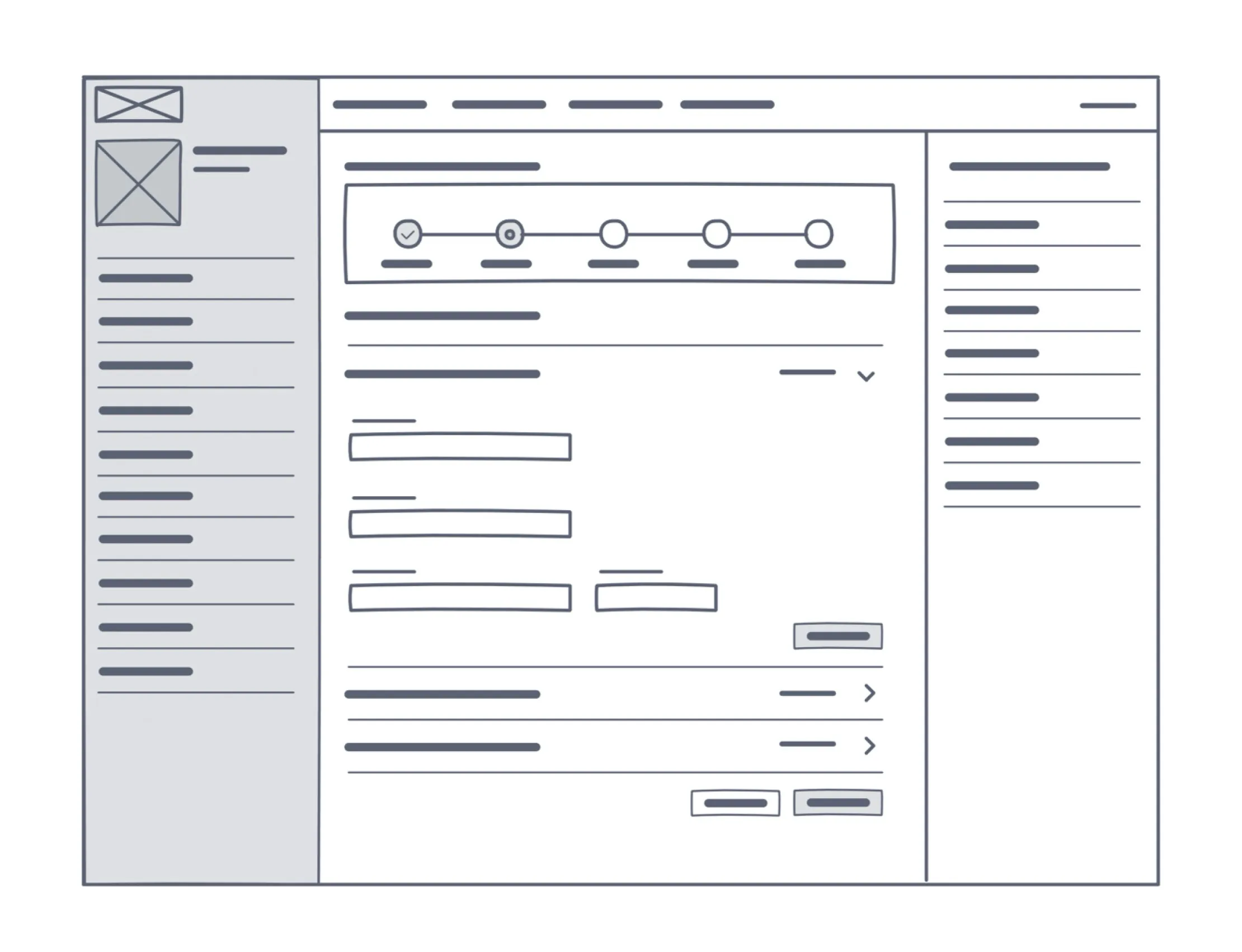
Patient questionnaires
Capture information prior to physician visit.
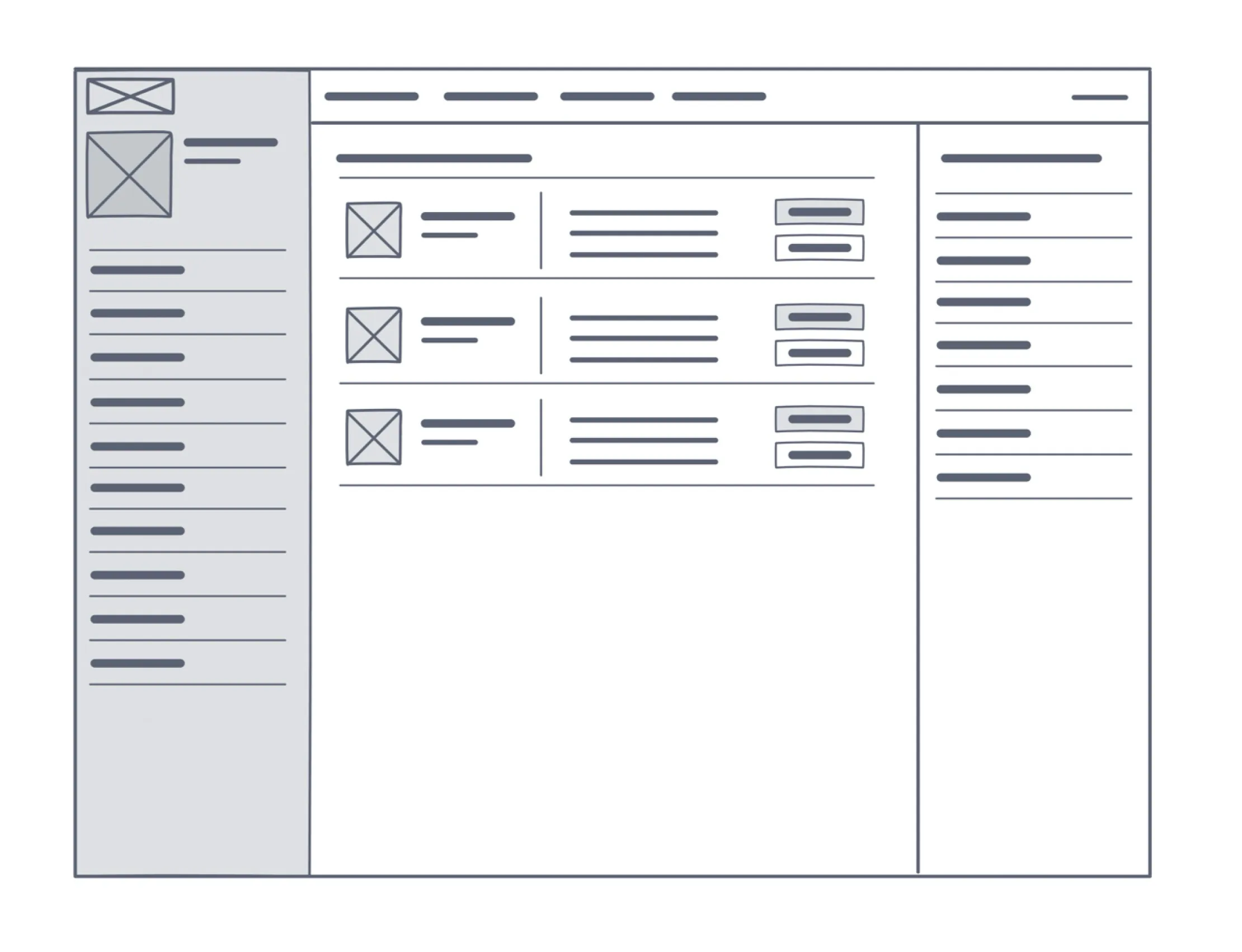
Review and save updates
Sync updates across for patient and physician to review.
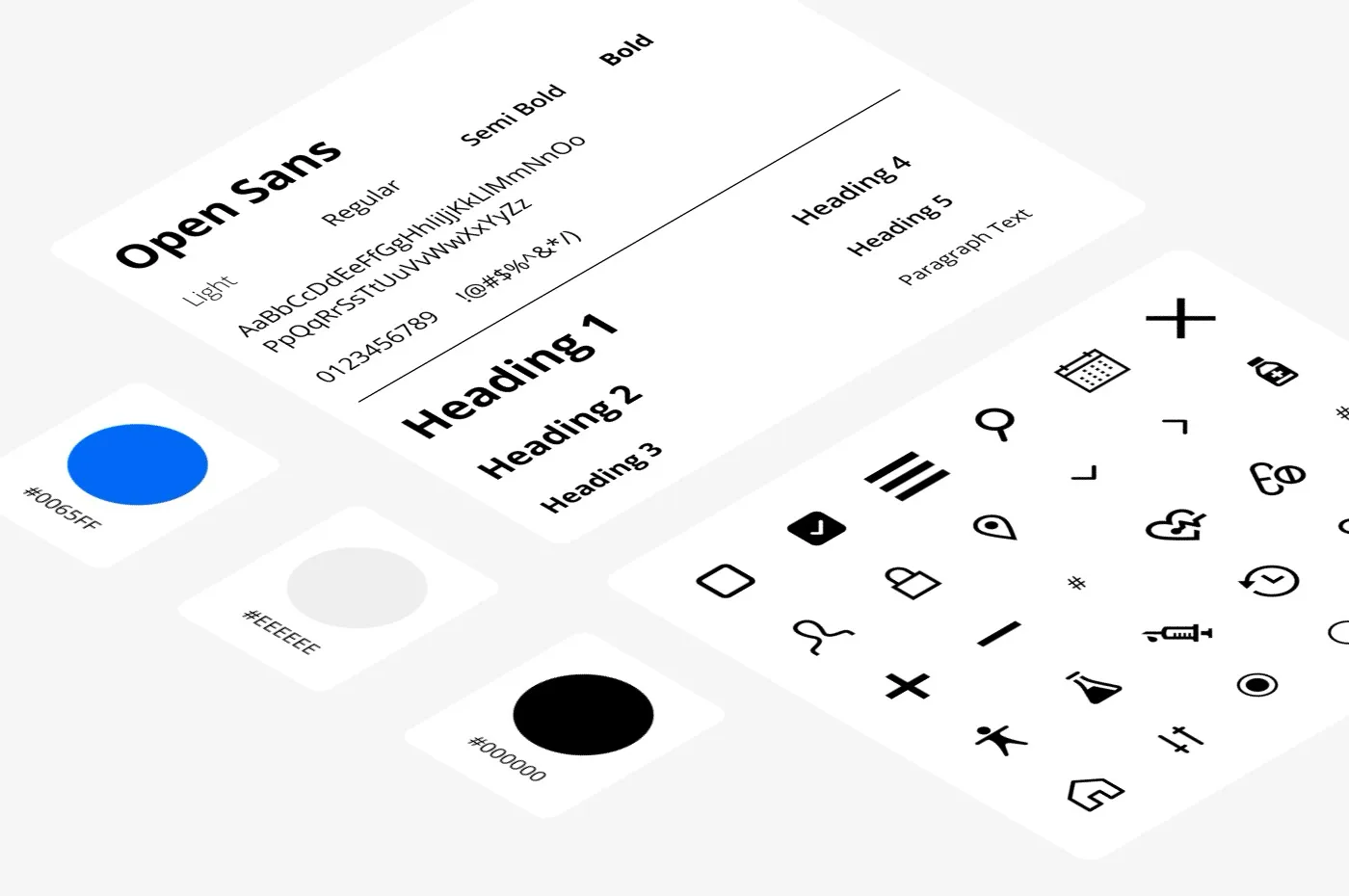
Design system
Standardize components to differentiate component states during user interactions.
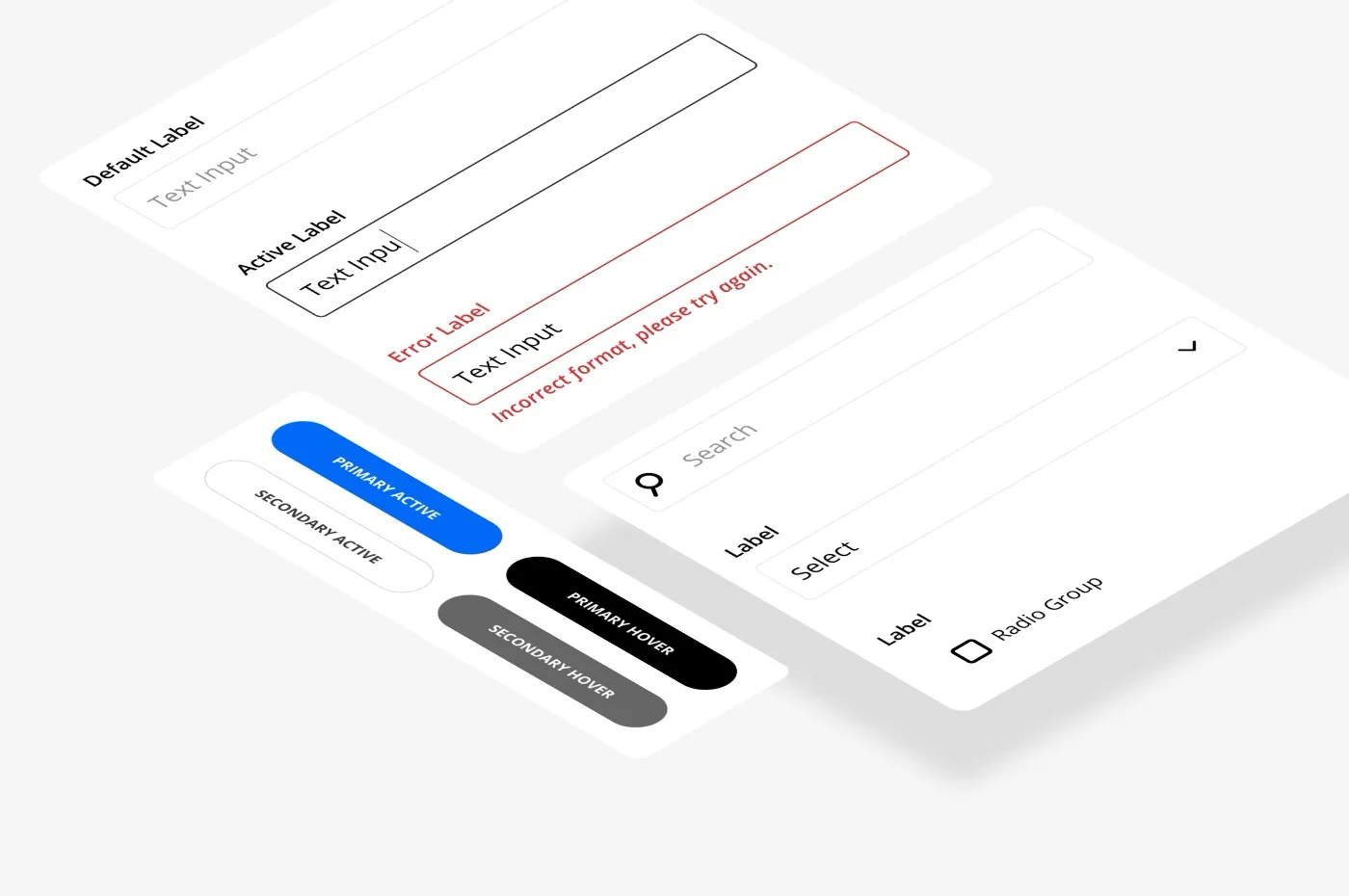 Visual language
Type hierarchy, color palette and iconography.
Visual language
Type hierarchy, color palette and iconography.
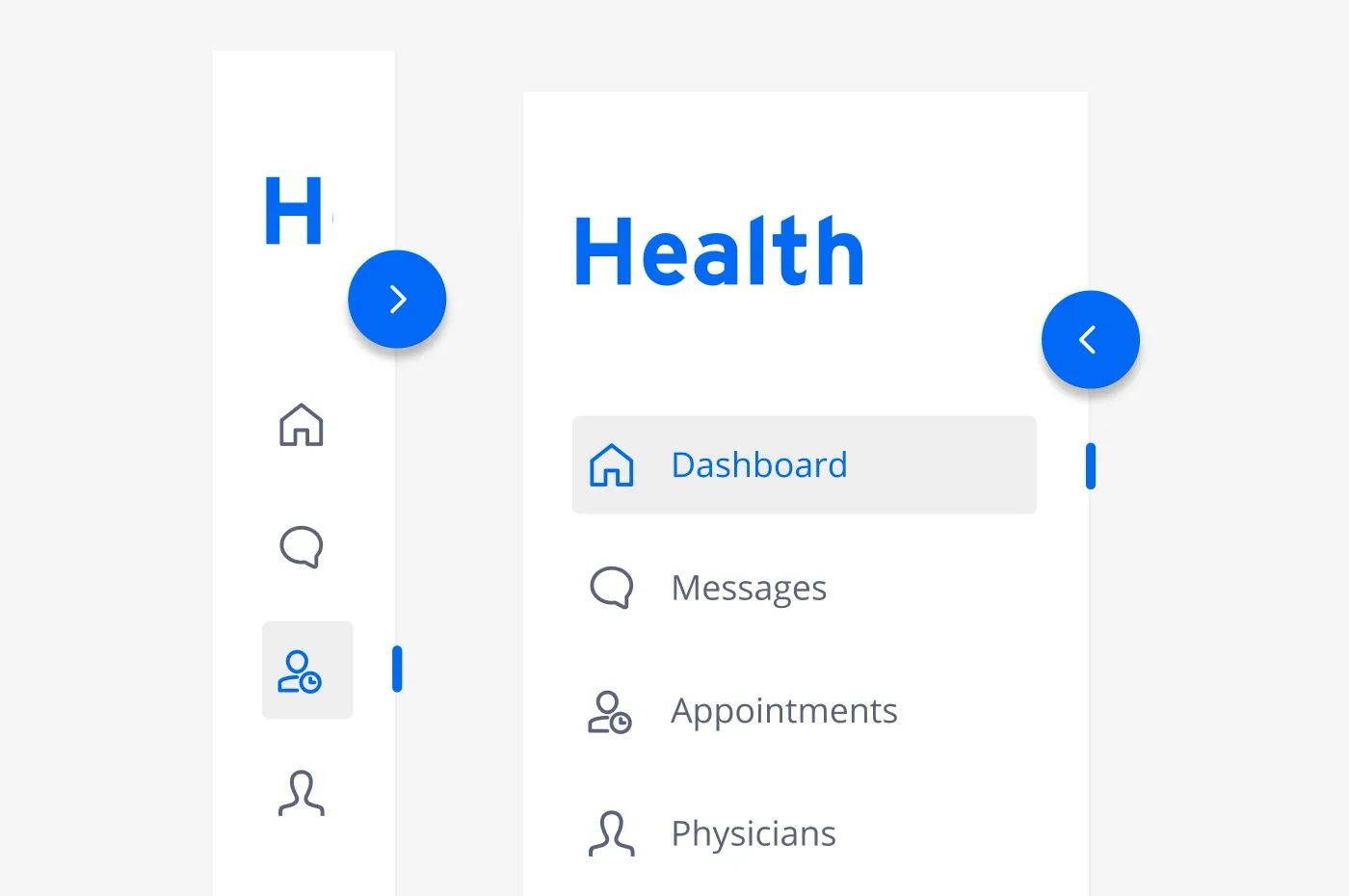
 Navigation panel
Maximize screen real estate by truncating when in client focus view.
Navigation panel
Maximize screen real estate by truncating when in client focus view.
Wireframes
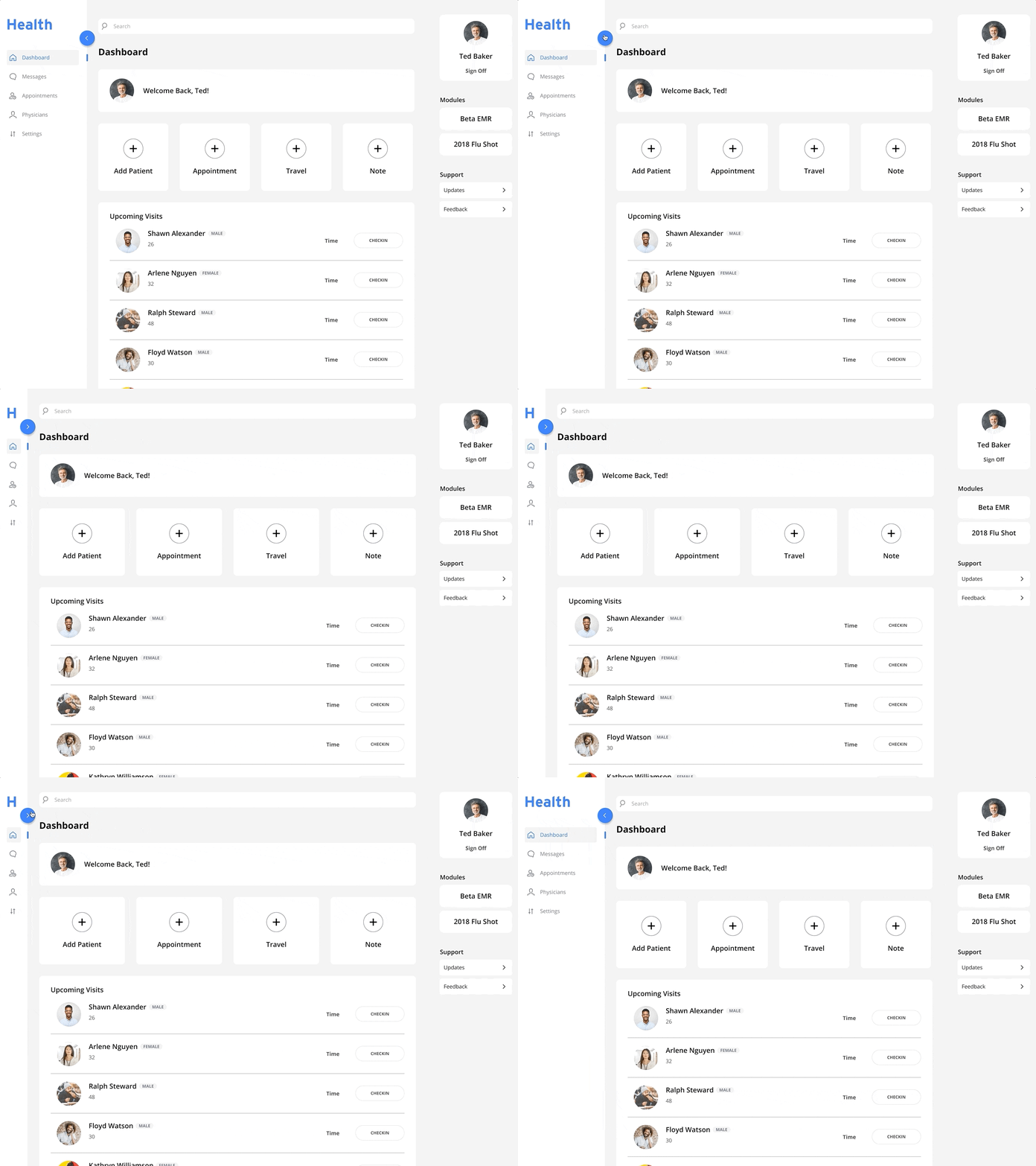
Wireframes and responsive screens representing primary flows for nurse data capture and chart review.
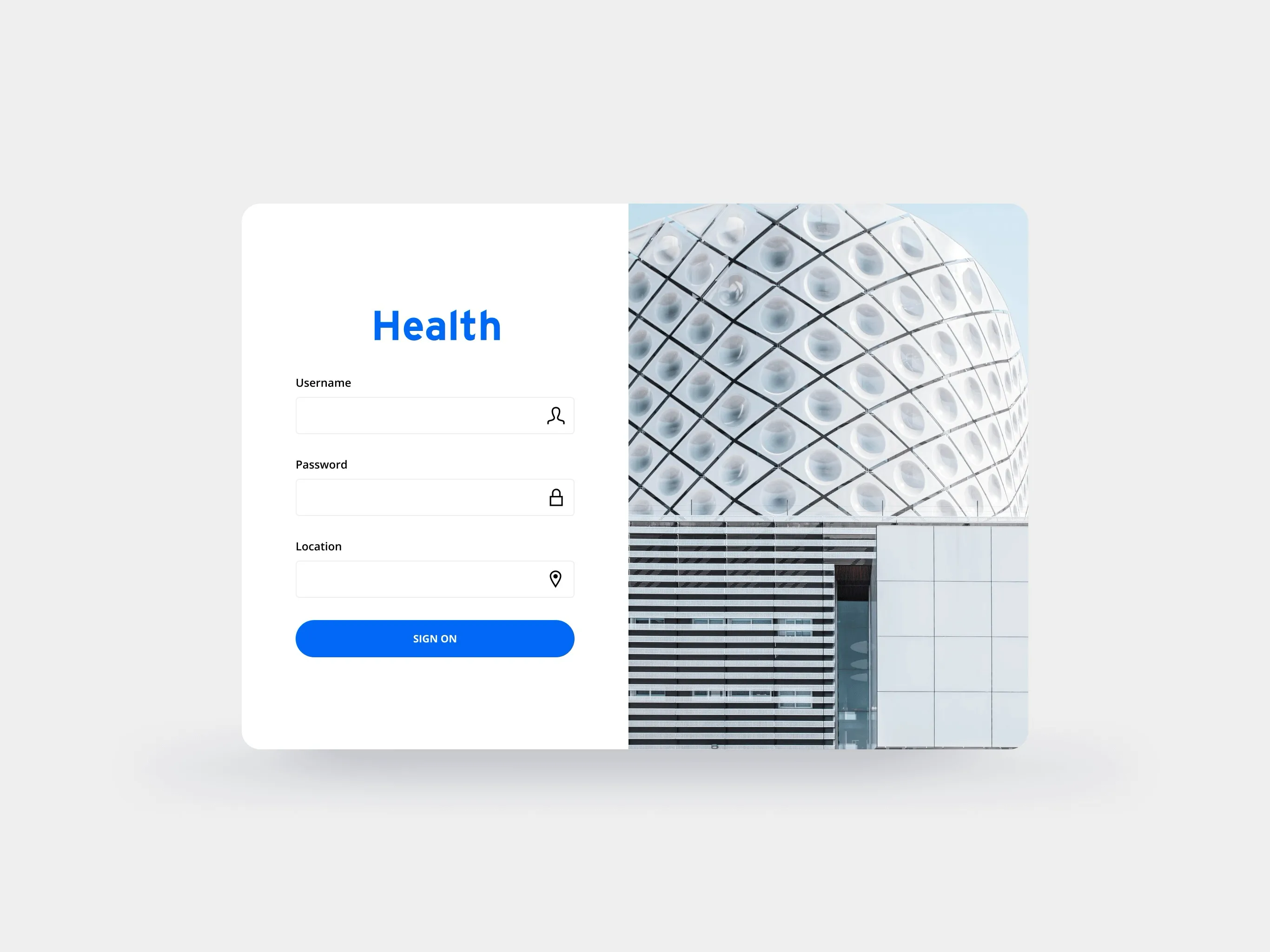
Sign on screenSecure patient privacy and verify nurse & physician access by location.
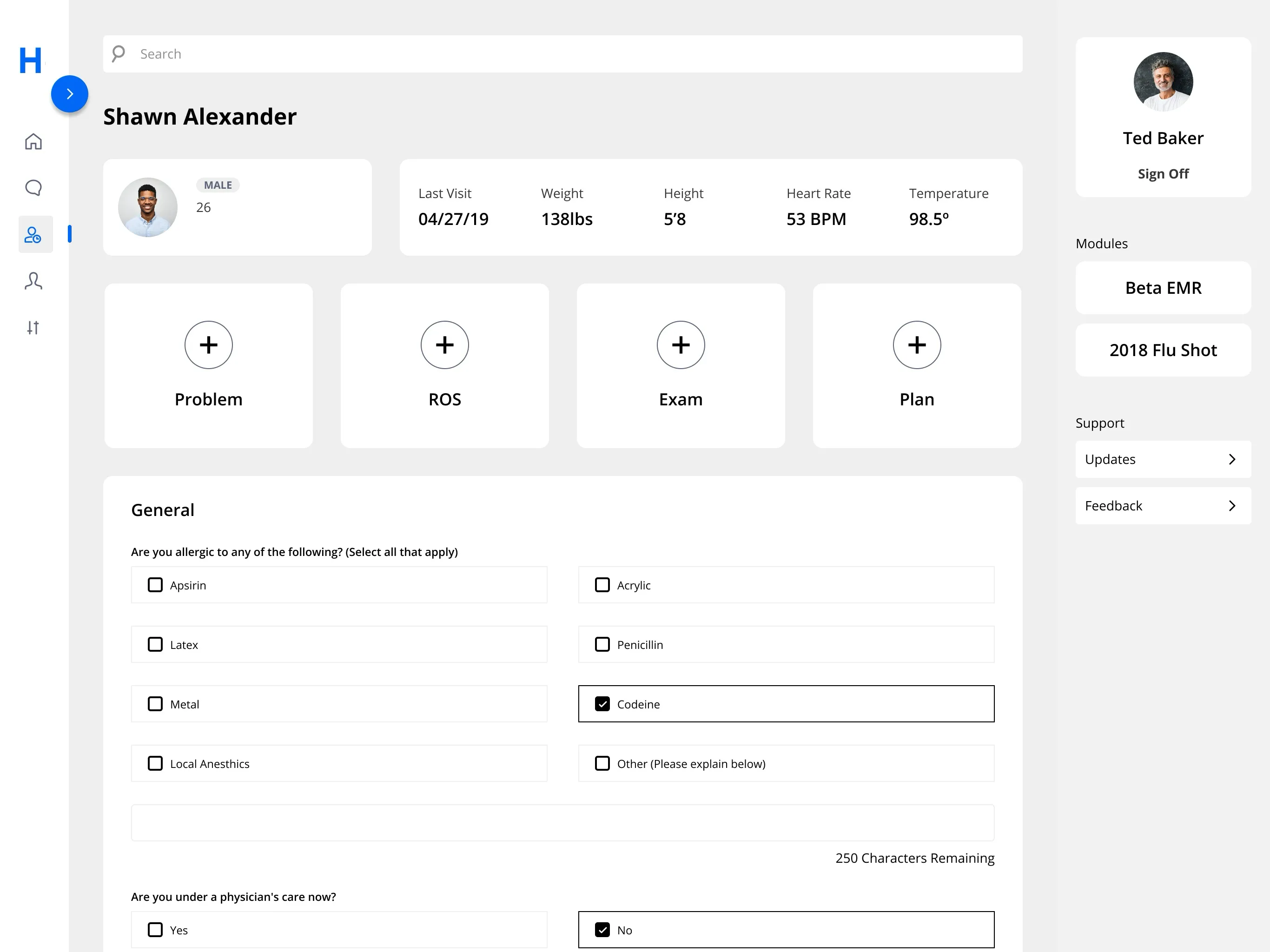
Navigation panelExpand/Collapse navigation options.
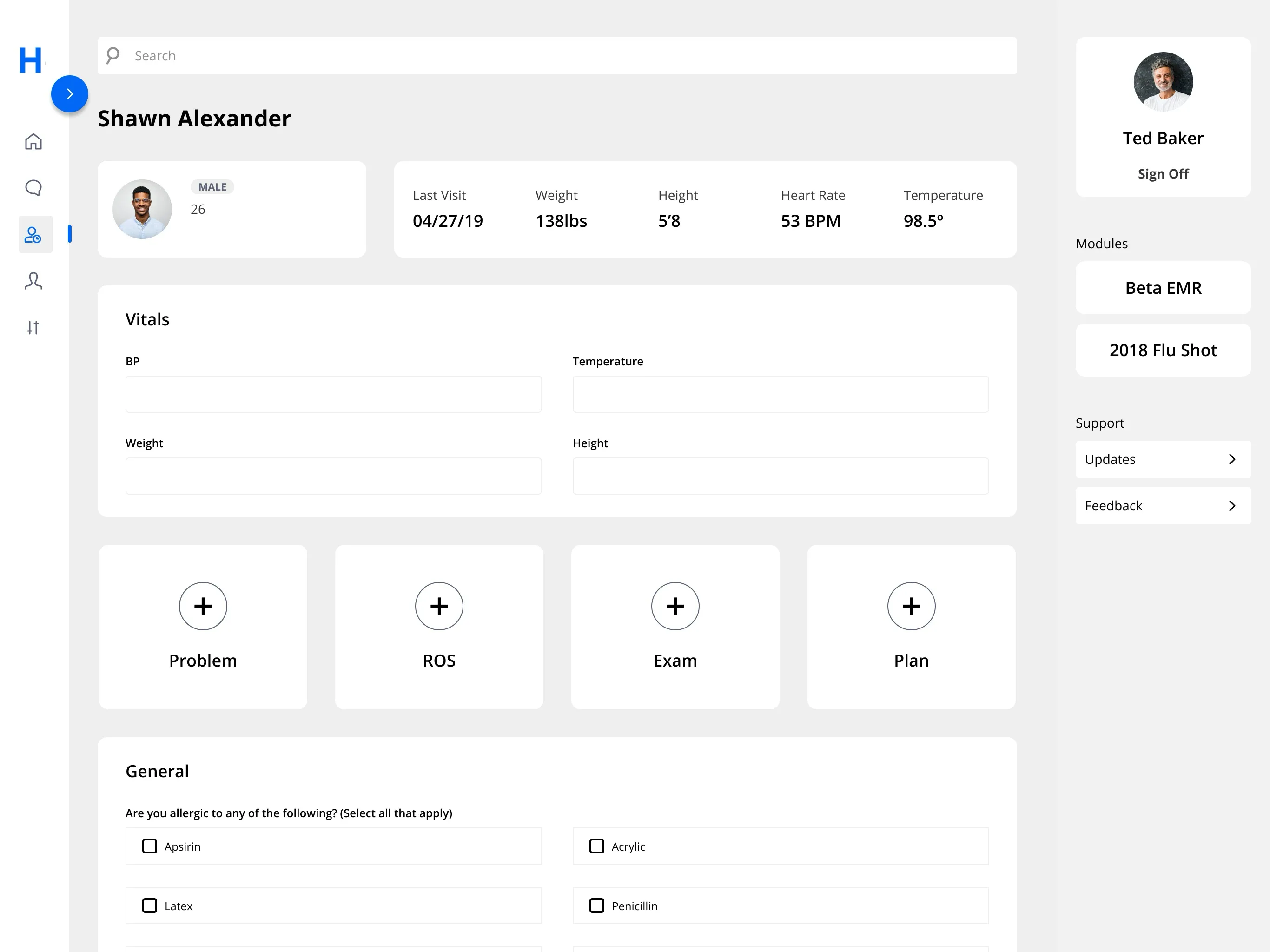
Patient vitalsView vitals and collect new patient information.
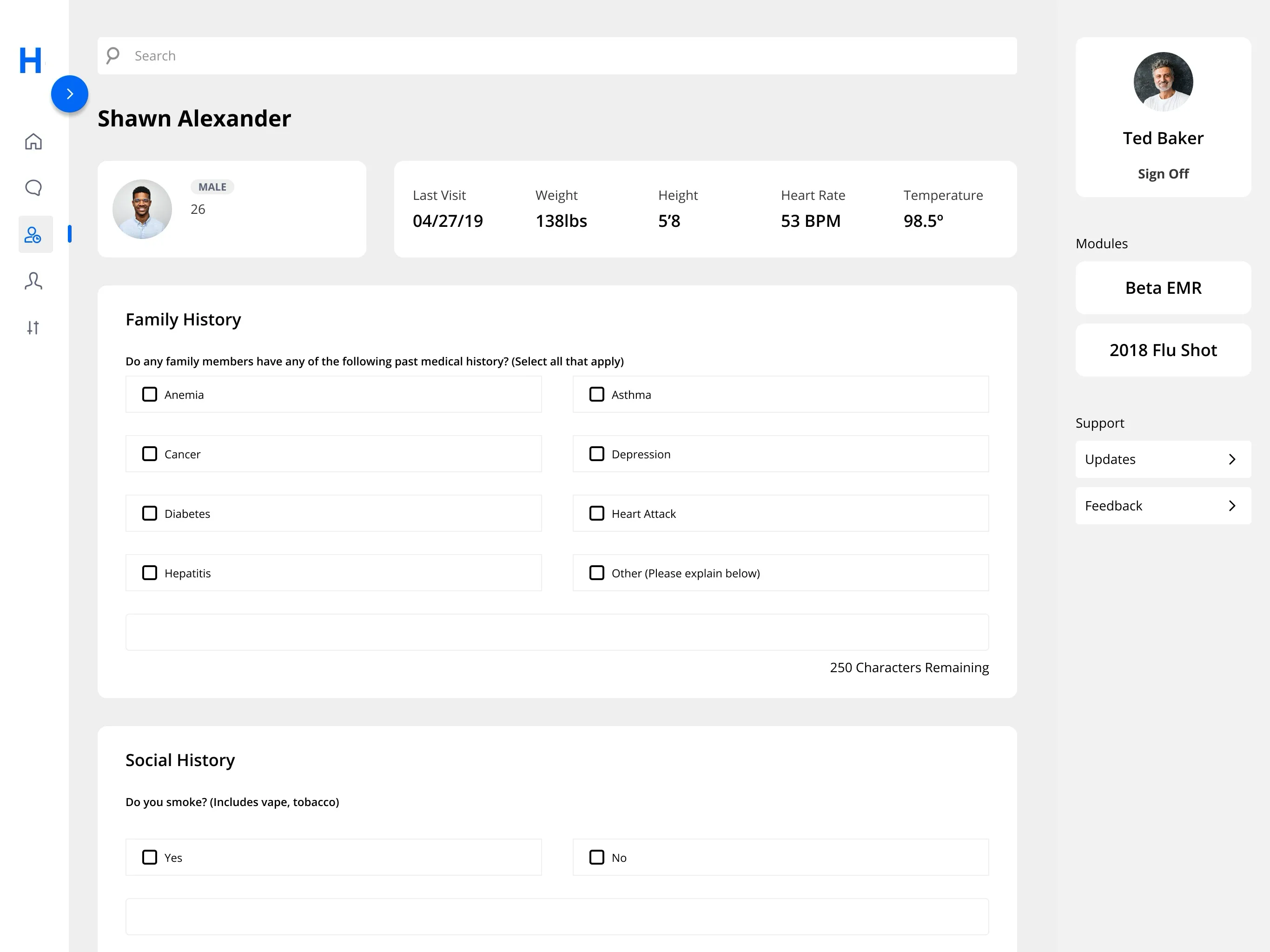
Family historyCollect/update patient family history information.
Chart reviewVerify new and existing information before updating for physician notification.
Takeaway
This design exercise was one of my first introductions to using prototyping to convey behavior beyond interactive states. The opportunity to regain screen real estate allowed me to start expanding my deeper understanding of spacing principles in user interfaces.
Lessons learned
- Ambiguity is a normal reality when navigating a problem space and areas to focus on to address with iterative updates.
- Focus on context, user goals and tasks before investing too much time on visual design that may not solve user painpoints.
- There is a distinction outside of mobile first foundations when it comes to designing for native iOS and Android and not just responsive web.
Potential next steps
- Conduct a moderated usability test to define user insights and additional areas for improvement.
- Test and iterate until design interactions are meeting goals presented by stakeholders.
- Focus on patient user experience and their after visit sentiment and satisfaction qualitative insights.